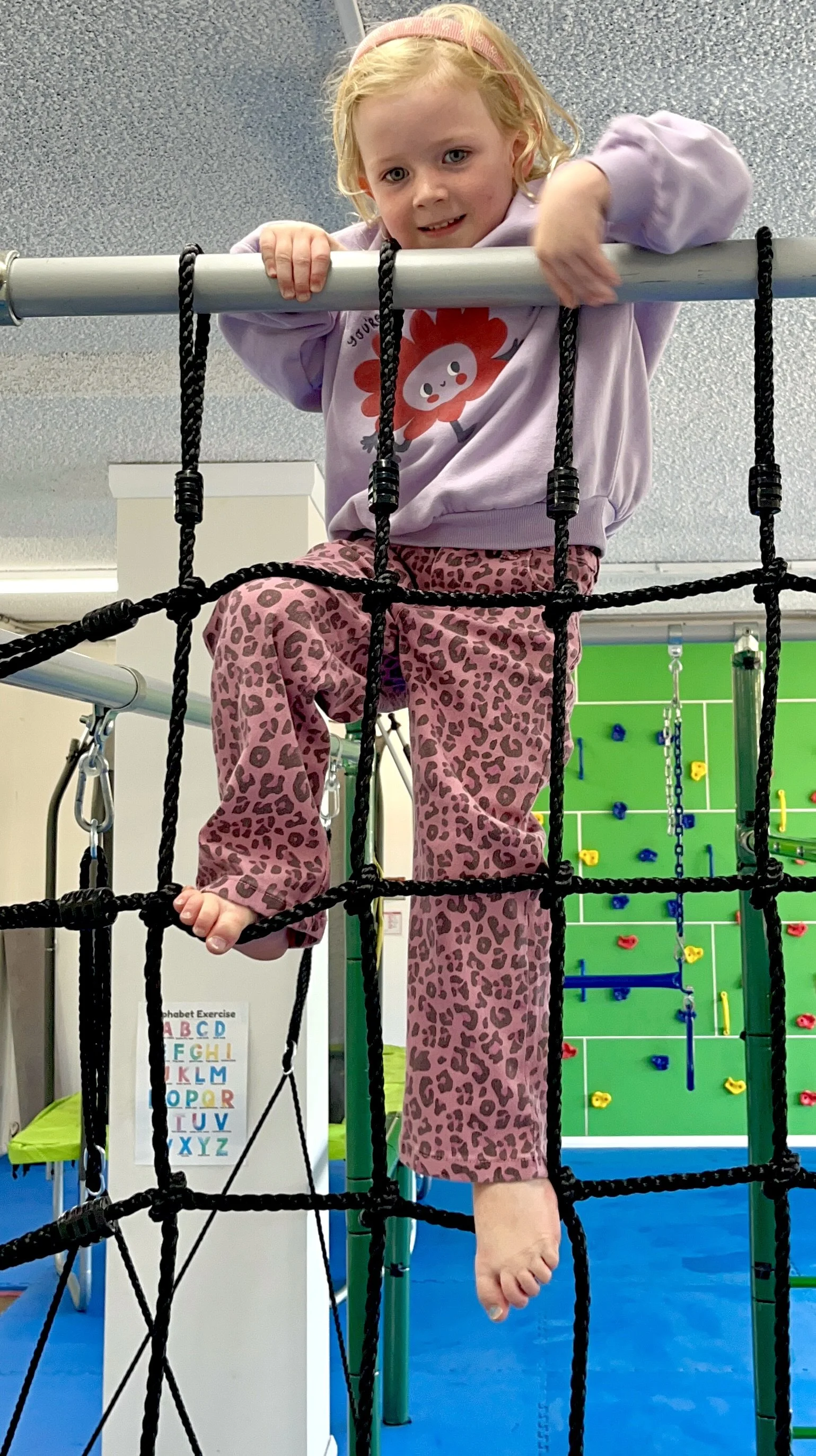
Why Movement Is Important for Children's Development: How Active Play Supports Everyday Skills
Why Movement Is Important for Children's Development: How Active Play Supports Everyday Skills
Have you ever noticed how your child seems happier, calmer or more focused after running around at the park?
Movement is much more than just exercise. It plays an important role in how children grow, learn, regulate their emotions and develop the skills they need for everyday life.
From tummy time and crawling to climbing, jumping, dancing and riding a bike, movement provides children with opportunities to explore their environment, build confidence and develop important physical, social, emotional and cognitive skills.
At Gumboots Child Therapy, we recognise that movement and play are valuable parts of children's development. As paediatric occupational therapists, we often incorporate movement-based activities into therapy to support children's participation in everyday activities.
What Does Movement Look Like for Children?
Movement doesn't always mean participating in organised sports or structured exercise.
For babies and young children, movement often happens naturally through play. Rolling, crawling, reaching for toys, climbing playground equipment and dancing to music are all wonderful ways to encourage physical activity.
For school-aged children, movement might include walking or riding a bike to school, playing during recess, visiting the park, swimming or participating in sports.
The important thing is to provide children with regular opportunities to move throughout the day.
Remember: Movement doesn't have to be structured to be beneficial. Sometimes, the simplest activities provide the best opportunities for learning and development.
How Much Physical Activity Does My Child Need?
The Australian Government provides age-based physical activity recommendations to support children's healthy growth and development.
AgeRecommended physical activityBabies (under 12 months)Interactive floor-based play several times daily. For babies not yet mobile, at least 30 minutes of supervised tummy time, spread throughout the day while awake.Toddlers (1–2 years)At least 3 hours of varied physical activity throughout the day, including energetic play.Preschoolers (3–5 years)At least 3 hours of physical activity throughout the day, including at least 60 minutes of energetic play.Children and teenagers (5–17 years)At least 60 minutes of moderate to vigorous physical activity daily, with vigorous and muscle- and bone-strengthening activities on at least 3 days per week.
These activities can be spread throughout the day rather than completed all at once.
Every child develops differently, and activities should be adapted to suit their individual abilities, interests and support needs.
Source: Australian Government 24-Hour Movement Guidelines.
Why Is Movement So Important for Children's Development?
Movement supports much more than physical fitness. It provides opportunities for children to develop skills that are important for learning, playing, building relationships and becoming more independent.
1. Physical Development: Building Strong Bodies and Motor Skills
Regular movement supports children's muscle strength, balance, coordination, endurance and overall physical development.
Two important areas of motor development are:
Gross motor skills
These involve the large muscles of the body and allow children to perform activities such as running, jumping, climbing, balancing and riding a bike.
Activities such as obstacle courses, playground climbing and ball games provide opportunities to practise these skills.
Fine motor skills
These involve the smaller muscles of the hands and fingers, which are important for activities such as drawing, writing, using scissors, doing up buttons and manipulating small objects.
Although fine motor skills require specific practice, whole-body movement can help develop postural stability, shoulder strength and body awareness, which support children's ability to use their hands effectively.
For example, climbing, crawling and playing on hands and knees can provide opportunities to strengthen the shoulders and upper body.
2. Emotional Regulation: How Movement Can Help Children Feel Calm and Organised
Have you ever noticed your child becoming restless, frustrated or overwhelmed after sitting for a long period?
Movement can be a helpful strategy for supporting emotional regulation.
Emotional regulation refers to a child's developing ability to recognise, understand and manage their emotions and responses to different situations.
Movement activities provide sensory information to the brain and body, which may help children feel more alert, calm or organised.
Some children may benefit from energetic activities such as running, jumping or dancing, while others may prefer slower activities such as stretching, walking or gentle rocking.
Two sensory systems are particularly involved in movement:
Proprioception (body awareness)
Our proprioceptive system provides information about where our body is positioned and how much force our muscles are using.
Activities that involve pushing, pulling, carrying, climbing and jumping provide proprioceptive input.
Vestibular system (movement and balance)
Our vestibular system helps us understand movement, balance and changes in head position.
Activities such as swinging, rocking, spinning and balancing stimulate this system.
Children respond differently to sensory experiences. An activity that helps one child feel regulated may be overwhelming for another.
This is why following your child's cues, preferences and comfort levels is important.
3. Attention and Learning: Why Movement Breaks Can Help
Children are not designed to sit still for extended periods, particularly during their early developmental years.
Movement breaks can help some children manage restlessness, maintain engagement and return to learning activities feeling more ready to participate.
For example, a child who has been sitting during a classroom activity may benefit from a short movement break involving stretching, walking, jumping or carrying classroom materials.
Movement-based play also provides opportunities to develop important thinking skills, including:
Attention and concentration
Problem-solving
Planning and sequencing
Memory
Following instructions
Flexible thinking
An obstacle course is a great example. Children may need to remember the sequence of activities, plan their movements, coordinate their bodies and adapt when something becomes challenging.
These experiences help children practise skills that are useful in the classroom and everyday life.
4. Social Development: Learning Through Active Play
Movement and physical play also create opportunities for children to interact with others and develop social skills.
Games such as chasing, ball games, playground activities and team sports provide opportunities to practise:
Taking turns and sharing
Working cooperatively with others
Following rules and instructions
Communicating with peers
Managing winning and losing
Building confidence and friendships
Importantly, social participation looks different for every child.
Some children enjoy large group games, while others prefer playing alongside a friend, participating in smaller groups or engaging in individual movement activities.
The goal is to create enjoyable and meaningful opportunities for participation rather than expecting every child to engage in the same way.
How Can I Encourage My Child to Move More?
Encouraging movement doesn't need to be expensive, complicated or time-consuming.
Here are some simple ways to make movement part of your child's everyday routine.
Make it fun!
Choose activities based on your child's interests. If your child loves dinosaurs, create a dinosaur-themed obstacle course. If they love music, have a dance party together.
Incorporate movement into daily routines
Walking to school, playing at the park, helping with gardening or carrying groceries are simple ways to encourage physical activity.
Offer choices
Some children may feel more comfortable participating when they can choose between activities. For example, "Would you like to ride your scooter or play with the ball?"
Start small
If your child finds physical activities challenging, begin with short, achievable activities and gradually build their confidence.
Join in!
Children often enjoy movement more when parents, siblings or friends participate alongside them.
Celebrate effort and participation
Focus on your child's enjoyment, effort and progress rather than their performance or ability to complete an activity perfectly.
Movement Activities for Different Ages
Babies (0–12 months)
Supervised tummy time while awake
Reaching and grasping for toys
Rolling and floor-based play
Exploring different positions with support
Crawling and supported standing when developmentally appropriate
Toddlers and Preschoolers (1–5 years)
Dancing to favourite songs
Kicking and throwing balls
Playing follow the leader
Climbing playground equipment
Animal walks, such as bear walks or frog jumps
Simple obstacle courses
Riding tricycles or balance bikes
School-Aged Children (5–12 years)
Swimming and bike riding
Playground activities
Skipping and hopscotch
Team sports
Trampolining with appropriate safety measures
Nature walks and hiking
Building obstacle courses
Active games with friends
Teenagers (13–17 years)
Walking or hiking with friends
Swimming
Dancing
Skateboarding or cycling
Yoga
Gym activities with appropriate guidance
Recreational or organised sports
For children of all ages, the best activities are those that are enjoyable, accessible and appropriate for their individual development and abilities.
What About Screen Time and Sitting?
Technology can be a useful part of children's lives, whether for learning, communication, relaxation or entertainment.
However, finding a healthy balance between screen time, movement, sleep and other daily activities is important.
The Australian Government recommends the following limits for sedentary recreational screen time:
AgeRecommendationUnder 2 yearsNo sedentary screen time2–5 yearsNo more than 1 hour per day; less is better5–17 yearsNo more than 2 hours per day, excluding educational screen use
For babies and young children, prolonged periods in prams, highchairs or other equipment that restricts movement should also be limited, with regular opportunities for safe floor-based play.
Rather than focusing only on reducing screens, families can create a balanced routine that includes active play, social interaction, rest and meaningful activities.
For example, after some screen time, your child might enjoy going for a walk, playing outside, helping prepare dinner or dancing to their favourite music.
What If My Child Doesn't Enjoy Physical Activities?
Not every child naturally enjoys running, climbing, sports or playground activities.
Some children may find movement challenging because of difficulties with coordination, balance, motor planning, sensory processing, confidence or previous experiences.
Others may prefer quieter activities or require additional support to participate comfortably.
If your child avoids movement, frequently trips or falls, struggles to learn new motor skills or becomes distressed during certain physical activities, it may be helpful to explore what is making participation difficult.
The goal isn't to force children to participate in activities they find uncomfortable. Instead, we want to understand their individual needs and help them find movement experiences that feel safe, enjoyable and achievable.
How Can Occupational Therapy Help?
Occupational therapists support children to develop the skills they need to participate in meaningful everyday activities, including play, learning, self-care and social participation.
Depending on a child's individual needs, occupational therapy may focus on:
Gross and fine motor coordination
Balance and body awareness
Motor planning and sequencing
Sensory processing and regulation
Emotional regulation
Attention and participation in everyday routines
Confidence and independence with daily activities
At Gumboots Child Therapy, we use a play-based, child-centred and family-centred approach to support children in developing their skills.
We work collaboratively with children and families to identify their strengths, understand their challenges and develop practical strategies that can be incorporated into everyday life.
Let's Get Moving!
Movement is an important part of childhood, and its benefits extend well beyond physical fitness.
Through active play, children have opportunities to develop coordination, confidence, emotional regulation, social connections and important everyday skills.
Whether it's jumping in puddles, climbing at the playground, dancing in the living room or simply enjoying a walk together, every opportunity to move can contribute to your child's development.
Remember, movement doesn't have to be perfect or structured. What matters most is helping children find enjoyable and meaningful ways to move their bodies.
Looking for Support With Your Child's Development?
If you have concerns about your child's coordination, sensory processing, emotional regulation or participation in everyday activities, our team at Gumboots Child Therapy in Cranbourne is here to help.
Our paediatric occupational therapists work with children and families to build skills, support participation and encourage confidence in everyday activities.
Contact Gumboots Child Therapy to learn more about our occupational therapy services or enquire about an appointment.
References and Further Reading
Australian Government – Physical Activity Recommendations for Children and Young People
Sydney Children's Hospitals Network – Movement Guidelines for Children
Healthdirect Australia – Benefits of Physical Activity for Children
Early Childhood Australia – Why Movement Is Important for the Developing Child